Corporate News
2021.11.08
Samsung Engineering crosses the Pacific Ocean with 4,800 tons of modules
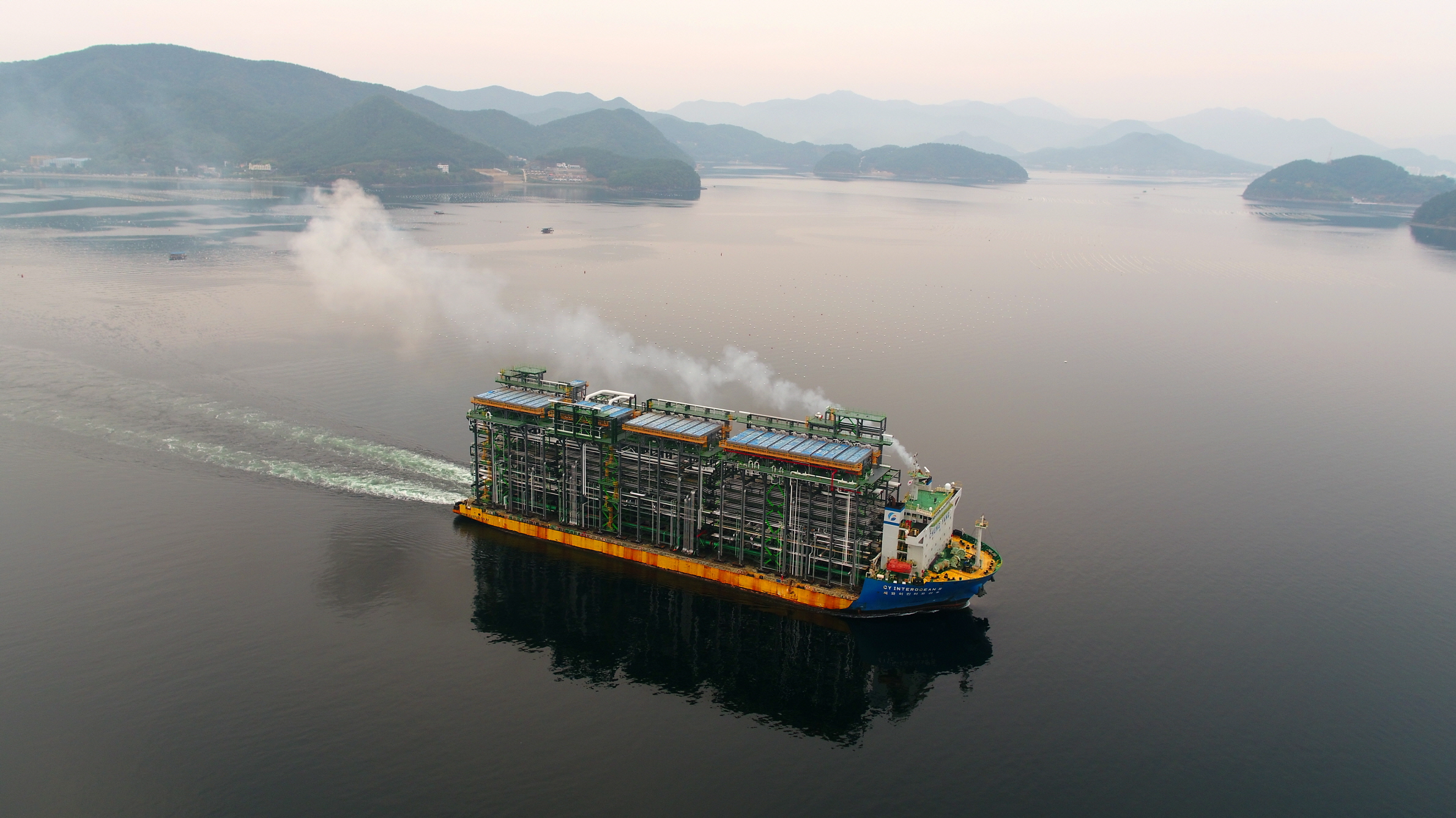
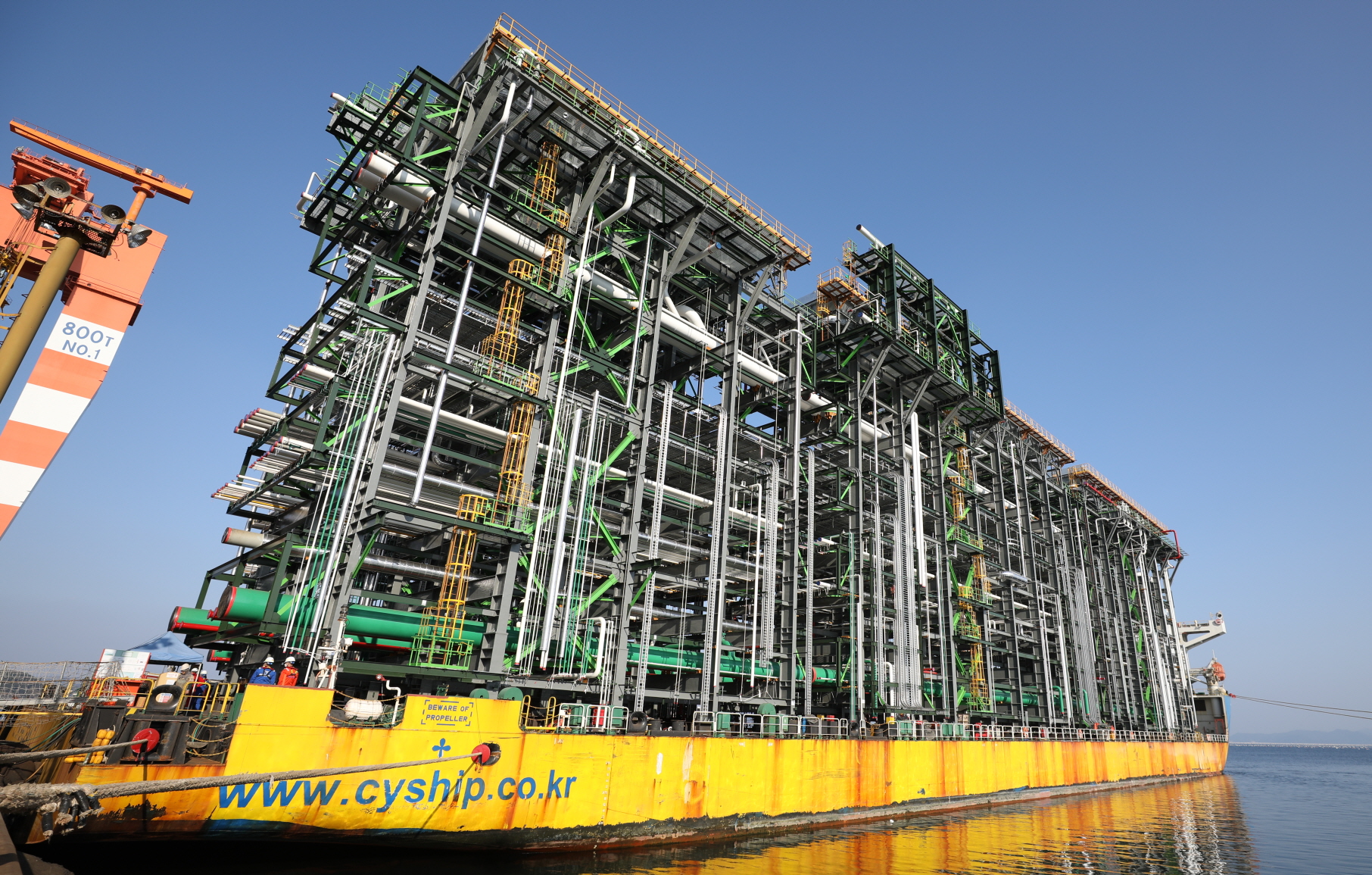
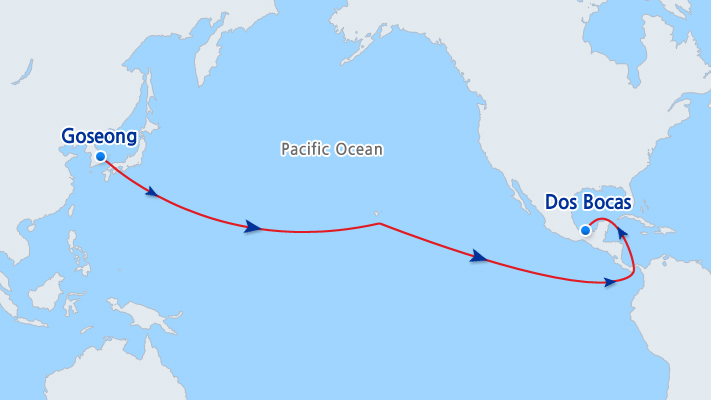
Samsung Engineering announced, that it shipped the first batch of modules, which are to be installed in the DBNR (Dos Bocas New Refinery) Project in Mexico. A total of six modules, including air cooler heat exchanger and PAR (pre-assembled pipe rack) modules, are headed to Mexico with this shipment. The modules, which were manufactured in a module fabrication yard in Goseong, Gyeongsangnam-do, weigh 4,800 tons, which is similar to the weight of a 3,300 mid-size vehicle. The ship loaded with the modules left Goseong on November 5 and embarked on a 16,000-kilometer journey that is expected to take fifty days (including the waiting time in the Panama Canal) across the Pacific Ocean to Dos Bocas, Mexico.
Samsung Engineering strives to innovate its project execution through modularization. To minimize complex and volatile risks in plant sites, it fabricates and assembles modules at separate yards in advance and installs them at the sites. This can reduce schedule, enhance quality and prevent safety incidents. The DBNR Project maximized the use of modules and applied 58 modules weighing 40,000 tons.
In addition, manufacturing major plant equipment in Korea is expected to revitalize the local economy. Samsung Engineering plans to fabricate 47 among 58 modules for the DBNR Project in collaboration with medium-sized companies in Korea. Samsung Engineering will continue to collaborate and share growth with medium-sized companies in Korea equipped with expertise and technological competence.
A spokesperson of Samsung Engineering stated, “The DBNR Project is a meaningful project, since it is an ultra-large project that will apply our company’s cutting-edge and innovative technology such as modularization and automation. The successful departure of the first set of modules will give impetus to the project execution, and we are determined to successfully complete the project.”
The DBNR Project, executed in Dos Bocas, Tabasco, eastern Mexico, will process 340,000 barrels of oil a day. Among the six packages, Samsung Engineering is executing Package 2, consisting of four units including a diesel hydrodesulfurization (DHDT) unit, and Package 3, which includes a fluid catalytic cracking (FCC) unit. Samsung Engineering started the FEED in 2019 and EPC execution in 2020. Currently, the progress rate stands at about 40 percent.

Refusal of collection of email addresses
We refuse the unauthorized collection of email addresses posted on this website using an email address collection program or other technical systems. Please be informed that if violated, criminal charges will be filed pursuant to the Act on Promotion of Information and Communications Network Utilization and Information Protection.